This book takes the town of Mashghara as an entry into Lebanese politics at the level of local life rather than abstract slogans. Through patronage, economy, and sectarian balance, Fawwaz Traboulsi shows how power is made in the details of kinship, prestige, labor, mediation, and family archive. The strength of the book lies in this microhistorical wager: local history is not treated as a marginal curiosity, but as a laboratory in which clientelism, sectarianism, and social change can be seen at work in their everyday material form.
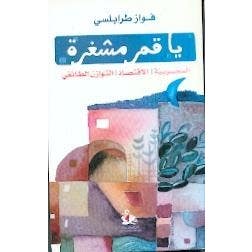
O Moon of Mashghara: Patronage, Economy, and Sectarian Balance
يا قمر مشغرة: المحسوبية، الاقتصاد، التوازن الطائفي
Guide to the Book
This guide to the book presents the book's chapters and main lines of argument based on its actual contents; it is not a literal reproduction of the printed table of contents. A microhistory of Mashghara — a small town in the western Beqaa Valley — from its pre-Ottoman origins to the Lebanese civil war. Drawing on family archives, Ottoman land records, and oral history, Traboulsi uses his ancestral village as a lens to analyse patronage (mahsubiyya), sectarian balance, and the political economy of rural Lebanon. The book is also a history of the Traboulsi family, tracing the rise and decline of a notable Christian household in a mixed Shia-Christian community.
• Introduction
- Classification of the family archives: agricultural documents, correspondence
- Methodology: writing local history from primary sources
Traboulsi introduces the family archive that forms the book's documentary backbone — agricultural contracts, land deeds, correspondence, and account books preserved by his grandfather Suleiman Traboulsi. He outlines his approach to microhistory: using a single village to illuminate the larger structures of Lebanese political economy.
1 The Town and Its Farms
- Geographic setting of Mashghara in the western Beqaa Valley
- Etymology of the town's name and its relation to water
- Sectarian composition: Shia, Catholic, Orthodox, Maronite, Protestant
- The town's quarters: the lower quarter (al-Hara al-Tahta, Shia) and the upper quarter (mixed/Christian)
- Extended Shia families: al-Shayeb, Fakhr al-Din, al-Zayyat
- Christian families and inter-confessional mobility
A portrait of Mashghara as a physical and social space — its springs, farms, and quarters. Traboulsi maps the town's sectarian geography: the Shia lower quarter, the mixed upper quarter, and the web of extended families that structured daily life. The chapter establishes the raw material of coexistence: land, water, kinship, and proximity.
2 A Historical Overview
- A Commercial and Cultural Link — Aramean and Canaanite origins, Arab tribes, the Qarmatians, the Emirate of Ibn al-Hanash, the caravan trade route, Shia scholarly tradition (al-Hurr al-Amili)
- Under the Emirate of Mount Lebanon — Demographic reversal from Shia village to mixed Christian; the Ottoman conquest, Shia displacement, Christian settlement, Junblatt feudalism
- Mashghara in the Events of 1860 — Mashghara's Christians in the 1860 civil war, Druze reactions, Fuad Pasha and the Asaad family
- Far from the Mutasarrifiyya, Close to the Mutasarrifiyya (1861–1920) — Abolition of the feudal (muqataʿji) system; land liberation and the 1858 Land Code; the silk economy and its impact on the Beqaa; trade with Mount Lebanon; emigration; the Damascus-Beirut axis
- Christian Families of Mashghara — Origins of the diverse Christian families (from Aleppo, Saydnaya, Damascus, Hawran, Palestine, Mount Lebanon); the Traboulsis in Deir al-Qamar and Mashghara; crafts and trades
- Joining Greater Lebanon — The 1918–1920 Arab Revolt; Hassan Abboud; the King-Crane Commission; the French entry; Suleiman Traboulsi appointed district director; population census and demographic transformation
A long-duration history of Mashghara from antiquity to the creation of Greater Lebanon in 1920. Traboulsi traces the town's transformation from a Shia scholarly centre on the caravan route to a mixed community under Junblatt feudalism, its role in the 1860 civil war, and the impact of the silk economy and Ottoman land reforms. The chapter ends with the French Mandate and the incorporation of the Beqaa into Greater Lebanon — a political act that reshaped Mashghara's destiny.
3 Rise, Development, and Dissolution of a Property
- Tax Farming, Trade, and Silk — The formation of the Traboulsi property; traditional agricultural economy; tobacco and vineyards; trade and brokerage; silk cocoon commerce with the Guérin factory in al-Qarieh
- Forms of Control over Agricultural Production — Nine detailed forms:
- Paying tax on behalf of producers in exchange for a share of production
- Lending and mortgaging, leading to property confiscation
- Advancing seed and cash loans
- Partnership and sharecropping contracts
- Buying produce in advance
- Tax guarantee and wage labour
- Building the large estate: acquisition of Lucia, Maydoun, Ain al-Tina, and Qalya; the role of state authority in land expropriation; muraba'a (quarter-share) relations; financial crisis and dissolution in the 1930s
The economic heart of the book: how the Traboulsi family built a large landed estate through tax farming, silk brokerage, moneylending, and sharecropping — and how that estate dissolved in the crisis of the 1930s. Traboulsi catalogues nine forms of surplus extraction that allowed a notable family to control agricultural production without owning all the land, revealing the mechanisms of rural capitalism in the Levant.
4 Patronage, or the Unequal Exchange of Services
- The Patronage Network — A triangular structure: the local notable (wajih), the family/retinue (lafif), the regional boss (za'im)
- Family Partisanship — The Traboulsi clan and its allies; control of the municipality and the mukhtariyya
- The Family Retinue and Its Rivals — The Rizk family, then the Ibrahim-Nassif family as competitors; patterns of local political division
- "The Farms" — Network of agents and allies in neighbouring villages: Sheikh Ali al-Zein, Hammoud Shibli, Asaad Jaber, Sheikh Najib al-Khashin
- Zahleh — Relations with Shibl Damous, Moussa Nammour, Elias Taama al-Skaff
- The South — Alliance with the Asaad and al-Zein families
- The Mukhtara — Relations with the Junblatt family; Kamal Jumblatt and electoral influence
- The Two Faces of Mediation — The notable as representative of clients and as wielder of power against them
- Ideological Representations, or Role Reversal — How regional bosses portray themselves as servants of the local notable; masking inequality
- Services and Exchanges — Detailed typology:
- The local notable's services to his constituents (personal, administrative, mediation)
- Mutual services with clergy
- The local notable's services to the regional boss
- The regional boss's services to the local notable (appointments, judicial mediation, favours, collective services)
- "The Card," or the Reproduction of the Patronage System — The identity card as instrument of mediation; the ritual of muraja'a (petition)
The theoretical centrepiece: an anatomy of Lebanese patronage (mahsubiyya) as a system of unequal exchange. Traboulsi maps the triangular network linking the local notable, the family retinue, and the regional political boss — showing how services flow upward and downward through this hierarchy. The chapter names names: the Traboulsis, the Junblatts, the Asaads, the Skaffs. The "card" (kart) — the identity document presented at every petition — becomes the symbol of a system that reproduces itself through endless ritual mediation.
5 Lifestyle of a Local Notable
- Westernisation as Social Distinction — "The Palace"; identification with Beirut and the Anglo-Saxon Protestant milieu; Suleiman's fourteen children; emigration to America; raising daughters (Lily in Baghdad); the cultural gap with the rural surroundings
- The Masonic Network — Suleiman's membership in Freemasonry; George Rizk Allah and the Lebanese-Egyptian Lodge; the Hermon Lodge; motives for joining; Freemasonry as supplementary service network; Shehadeh Shehadeh and the AUB alumni club; secrecy and the relationship with the Church
The cultural life of a provincial notable in the French Mandate period. Suleiman Traboulsi's "Palace," his Francophile and Anglophile aspirations, the education of fourteen children (some sent to America, one daughter to Baghdad), and the widening gap between the notable's cosmopolitan lifestyle and his rural constituency. The chapter reveals the role of Freemasonry as a parallel patronage network — the Hermon Lodge as a space where notables could access additional services and connections beyond sectarian channels.
6 Phases of the New Patronage System
- Economic Developments and Their Social Consequences — Collapse of the silk economy; growth of the tanning industry; World War II; new social stratification (landowners vs. industrial bourgeoisie); conditions of tannery workers
- Modern Political Parties and Their Trade Union Apparatuses — The SSNP (tannery owners' committee, landowners' committee); the Lebanese Communist Party (tannery workers' union); intersection of ideological and family partisanship; May Day celebrations; the 1949 "National Social Revolution" and the Battle of Sahmar; the 1958 crisis
- New Rich and Job Brokers — Decline of tanning after 1948 and 1950; emigration; the Rafiq al-Dibs/Hassan Awadeh duo vs. the Hussein Mansour/Albert Karam duo; competition over jobs and services; the 1960 and 1963 elections
- War and the Triumph of Sectarianism — The 1975–1990 civil war; the 1982 Israeli occupation; Lebanese Forces control then Hezbollah and Amal dominance; Christian emigration; rebuilding of the mosque
The final chapter traces how the old patronage system transformed in the 20th century: the collapse of silk gave way to tanning; modern political parties (the SSNP, the LCP) overlaid but did not replace family allegiances; and the civil war completed the demographic transformation from a mixed community to one dominated by Shia parties. The rebuilding of the mosque on the ruins of the old order becomes the chapter's closing image — the triumph of sectarianism over the mixed village that once was.
• Conclusions
Traboulsi summarises the book's principal findings: the relationship between social hierarchy, patronage, and sectarian balance; the unequal exchange of services as the motor of political life; the impact of ideological parties on family-based politics; and the final demographic shift toward Shia predominance that the civil war sealed.
Back Matter
- Bibliography (Arabic and foreign sources)
- Appendices: letters and documents from the Suleiman Traboulsi archive
- Index of Names
- Index of Places