This book offers a broad synthesis of modern Lebanese history from the emirate to the Taif Agreement without treating sectarianism as destiny or separating politics from its social economy. Fawwaz Traboulsi links state formation to countryside and city, labor and migration, and regional intervention, rewriting the national story from below and from within its contradictions. It has become a standard reference for anyone seeking to understand modern Lebanon beyond the myth of “exceptionalism” and beyond accounts of the civil war as an eruption of timeless communal hatred.
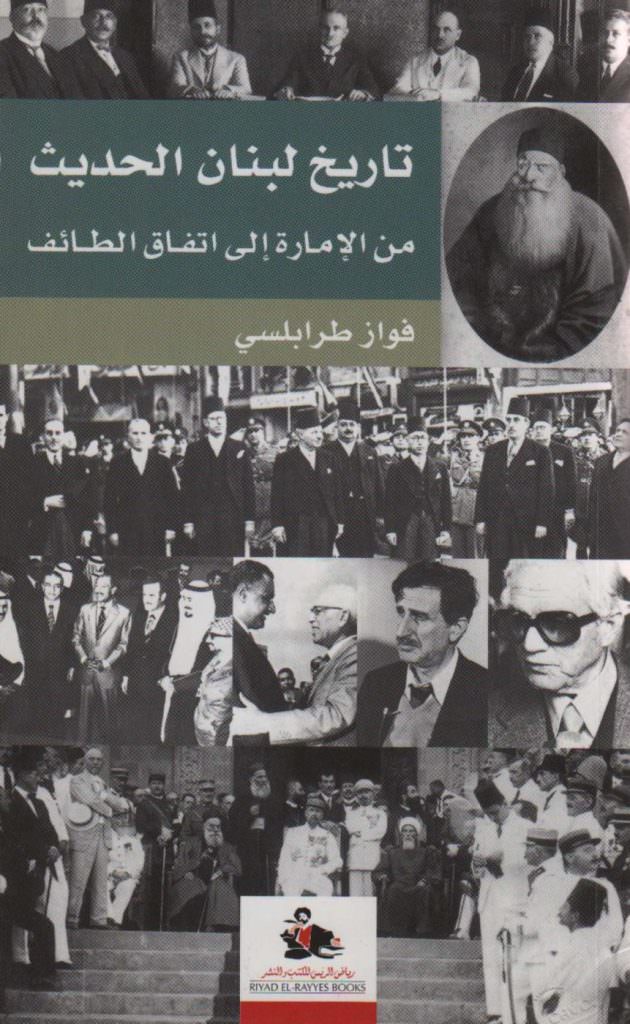
A History of Modern Lebanon (First Arabic Edition)
تاريخ لبنان الحديث: من الإمارة إلى اتفاق الطائف (الطبعة العربية الأولى)
Guide to the Book
This guide presents the book's chapters and main lines of argument based on its actual contents; it is not a literal reproduction of the printed table of contents. Traboulsi opens by identifying a fivefold structure of hierarchies and conflicts that governed Mount Lebanon from the Ottoman period onward: the religious millet system, the hierarchy between the notables (manasib) and commoners ('amma), the tension between local rulers and the central authority, rivalries among the muqata'ji families, and the rent-based hierarchy over land. This fivefold structure is the analytical key to the entire book: every chapter returns to these contradictions and traces their reproduction in shifting forms, from Ottoman iqta' to peripheral capitalism to the war economy. The first edition ends with the Taif Agreement as a "provisional conclusion" — a settlement born of exhaustion, not of victory.
Ottoman Lebanon
1 The Emirate of Mount Lebanon (1528–1842)
- Feudalism in Mount Lebanon — the iltizam system and the five hierarchies
- Fakhr al-Din II, the merchant-prince — expansion, the alliance with Tuscany, and execution in Istanbul
- The Shihabs — succession from the Ma'n dynasty, confessional shifts, Bashir Shihab II and the centralization of power
- The Egyptian invasion — Bashir II's alliance with Muhammad Ali and the collapse of the old equilibrium
- Sheikhs and peasants — the structure of land rent, the mudabbirun, merchants, and the Maronite Church
The opening chapter maps the deep structure of three centuries of political life in Ottoman Mount Lebanon. Traboulsi begins by dissecting five interlocking hierarchies — the millet system, the hierarchy between the manasib and the 'amma, the tension between center and periphery, dynastic rivalries, and rent-based conflicts — arguing that their interaction is what transformed social conflicts into sectarian ones. He traces the rise of the Ma'n and then the Shihab dynasties through the iqta' system, passing through Fakhr al-Din II, who introduced the silk economy and allied with Tuscany against the Ottomans before being executed in Istanbul. The decisive pivot, in Traboulsi's reading, is Bashir Shihab II, who centralized power and allied with Muhammad Ali's Egyptian invasion (1831–1840), thereby shattering the old equilibrium between Druze and Maronite notables and opening the Mountain to direct European intervention. The chapter ends with the collapse of the Emirate under the weight of that intervention.
2 The Bloody Death of the Muqata'ji Order (1842–1861)
- The dual qa'im maqamiyya — a system designed for strife: dividing the Mountain between Druze and Christians
- The identity of the Mountain — the struggle over the "Christian origins of the land" versus Druze ascendancy
- Years of upheaval (1845–1858) — the Shakib Efendi regulations and the first sectarian representation
- The 'ammiyya of Kisrawan — Taniyus Shahin's peasant revolt and the commoners' republic
- The "Events of Sixty" — the Druze-Christian civil war and the massacres of 1860
- The role of the European powers — France, Britain, and military intervention
Traboulsi reads this period as the bloody transition from the muqata'ji order to peripheral capitalism. The dual qa'im maqamiyya system (1843), which divided the Mountain between Druze and Christian administrations, aggravated the crisis rather than resolving it. Traboulsi devotes extensive space to the 'ammiyya of Kisrawan (1858–1861), the peasant uprising led by Taniyus Shahin that established a commoners' republic for over two years, with an elected council of one hundred members, the majority of them smallholding peasants. He analyzes how two competing scales of value clashed within the movement: the scale of money and wealth held by the rising bourgeoisie, and the scale of land and self-sufficiency held by the peasants. Then came the "Events of Sixty" — the civil war launched preemptively by the Druze muqata'jis against the reverberations of the 'ammiyya, ending in massacres of Christians in the Chouf and extending as far as Damascus. In Traboulsi's reading, the Druze military defeat ended the muqata'ji order in its entirety — for the Druze leadership had fought to preserve it on behalf of all the muqata'jis — and their history from that point on became one of struggle for survival as a minority.
3 The Mutasarrifiya in Its Grandeur and Misery (1861–1915)
- Relative autonomy — the Reglement Organique, the Christian mutasarrif, the sectarian Administrative Council
- Dawud Pasha, Yusuf Karam, Abdel Qader — the three victims of the new order
- Colonial trade and silk production — "Lyon's colony," the cocoon-reeling mills, and a proletariat of women and children
- Monoculture and emigration — the emigration of a third of the population, remittances, and the crisis of Church waqf endowments
- A new social and political force — the Administrative Council as a stronghold for a middle class between Bkerki and Beit al-Din
- Colonial ambitions and demands for independence — France's military plans and reformist demands on the eve of war
The "long peace" under the Mutasarrifiya was the product of three factors: the growth generated by the silk economy, the export of the surplus peasant population through emigration, and the relatively limited external intervention. But Traboulsi exposes the devastating contradictory balance sheet of this period: political autonomy framed a dual economic dependency — on Beirut and the European market on one hand, and on the Syrian interior for food supplies on the other. The monoculture economy (raw silk exported to France) created a proletariat of reeling-mill workers — 12,000 out of 14,500 workers were women, laboring at wages equal to one-third of men's — and impoverished the peasants, a third of whom emigrated to the Americas. But the most analytically significant finding is what Traboulsi reveals about the emergence of a new socio-political force around the Administrative Council — a "middle" class composed of sons of the mudabbirun, landowners, professionals, and returning emigrants — positioned between the twin poles of Bkerki and Beit al-Din, and in whose midst the ideas of independence and Lebanese nationalism germinated. This, in Traboulsi's estimation, is the class that would govern Lebanon after independence.
4 Beirut, Capital of Commerce and Culture (1820–1915)
- Gateway between East and West — the port, the railway, Franco-British rivalry
- A city and society of a new type — the Municipal Council, expansion beyond the walls, the class-sectarian hierarchy
- The literary and cultural Nahda — printing presses, the press, the American and Jesuit universities
- The Arabs between decentralization and independence — competing identities: Arabist, Lebanist, Ottomanist
- The calamities of World War I — famine, blockade, the death of a third of the population
Traboulsi devotes an entire chapter to Beirut because, in his view, it is the key to understanding Lebanon's modern political economy. The city, whose population tripled between 1830 and 1920, was simultaneously a model of Ottoman modernity and a spearhead of European domination. The chapter traces the urban transformation in detail: the Municipal Council, established in 1868, which became a representative of the city's interests vis-a-vis the central government; the expansion beyond the walls, where the commercial aristocracy built its mansions in Ashrafiyya and the new bourgeoisie settled in Zuqaq al-Blat and Qantari; and the emergence of popular suburbs in Basta and Mazra'at al-'Arab. He charts the rise of a local commercial bourgeoisie that succeeded in imposing itself as an intermediary between European capital and local markets. And he traces the sectarian distribution of wealth: the Orthodox aristocracy (Sursock, Bustros, Tueni) controlling land and regional trade, versus the rising Catholic bourgeoisie (Pharaon-Chiha) tied to silk and French capital, while Muslim merchants were confined to the grain trade and agricultural exports. In the cultural section, he depicts the Nahda as a battlefield of identities: Arabist, Islamist, and Lebanist, with attention to the class dimension — for intellectuals and the bourgeoisie had material interests in one orientation or another depending on their economic ties. The chapter ends with the catastrophe of the Great War famine, in which roughly a third of the population perished.
State-Building
5 Dialectics of Union and Separation (1915–1920)
- Lebanon in the partition of the Arab East — Sykes-Picot, Balfour, the King-Crane Commission
- The debate over union and separation — Faisal, Patriarch Hoayek, and the Administrative Council
- Opposition in the annexed territories — the revolt in the South, the Wadi al-Hujayr Congress
- "Greater Lebanon," "Lesser Lebanon," and "Medium Lebanon" — the economy or autonomy?
- Demarcating the southern borders
Traboulsi opens the chapter with a foundational proposition: Lebanon within its borders of 1 September 1920 had no prior existence in history. It was not a "return to natural borders" as Lebanese nationalists claim, nor an "artificial entity" as Arab nationalists allege — but rather a product of colonial partition, like all the other countries of the Eastern Mediterranean. The chapter traces the overlapping negotiations between France, Faisal, Patriarch Hoayek, and the Administrative Council, showing how the final outcome — Greater Lebanon under the French Mandate — did not correspond to any Lebanese faction's program. The irony is that a majority of the Administrative Council was on the verge of signing an agreement with Faisal that denounced the French Mandate in exchange for recognition of Lebanese independence — but French forces intercepted the delegation and arrested it at Sofar. The new entity incorporated areas with Muslim majorities that had not been consulted — the structural dilemma in which Traboulsi sees the key to Lebanon's subsequent history.
6 From Mandate to Independence (1920–1943)
- Direct French rule — the High Commissioner, the "advisors," the Muslim boycott
- The secular Saray — the reforms of the Masonic Commissioner and the Maronite Church's rejection of them
- The Constitution of 1926 — a hybrid text: individual rights, sectarian quotas, and the surrender of personal status law to religious authorities
- Emile Edde and Bishara al-Khoury — the founding rivalry: Christian Lebanon versus independent Arab Lebanon
- Phoenicia and "the Switzerland of the East" — Charles Corm and Michel Chiha: identity and political economy
- The year of crises, 1936 — the Regie strike, the Palestinian revolt, the rise of the Kataeb, the Najjada, and the Syrian Social Nationalist Party
- Toward independence — the role of Britain and Egypt, the National Pact, the crisis of November 1943
The chapter covers a quarter-century of direct colonial rule that bore the name "Mandate." France treated Lebanon and Syria as a single economic unit controlled by the Interets Communs (customs, railways) and the "concessionary companies" (the Bank of Syria and Lebanon, the tramway and lighting company, the port authority). The Constitution of 1926 — whose sectarian additions are believed to have been drafted by Michel Chiha — is the founding hybrid text: it legislates individual rights and equality, then enshrines the rights of the sects, sectarian representation, and the surrender of personal status law to religious authorities. The chapter is built around the founding rivalry between Emile Edde — Lebanon as a Christian Mediterranean homeland that invites dissenting Muslims to "emigrate to Mecca" — and Bishara al-Khoury — an independent Lebanon built on partnership with Muslims and Arab relations. Behind each stood a network of interests: Edde represented the declining commercial aristocracy and French companies, while Khoury represented the rising financial bourgeoisie (the Pharaon-Chiha bank). On the ideological plane, Charles Corm, who saw Christianity as the heir to Phoenicia ("I am the true Lebanese, authentic and devoted"), intersected with Chiha, who confined Phoenicianism to economics and defined Lebanon as "a nation of merchants" and "a country of religious minorities in partnership." In 1936 — the year of all crises — the competing identities crystallized into new parties: the Kataeb, the Najjada, and the SSNP. In parallel, the chapter traces the emergence of a cross-confessional democratic current combining demands for independence with social reform, represented by Kazem al-Solh, who argued that the question of "union" with Syria had become secondary and that the Christians themselves had grown weary of France. The chapter ends with the National Pact of 1943, drafted in Cairo between Khoury and Solh — a pragmatic arrangement between two elite factions produced by the Anglo-French rivalry. The conclusion: "the periodic reproduction of the Lebanese entity by means of a settlement between a regional power and an international power" — a tradition inaugurated by Britain and Egypt's role in 1943.
7 The Republic of Merchants (1943–1952)
- Sailing in stormy seas — independence under French economic dependency
- The battle over evacuation — the struggle over French concessions and the fate of the Bank of Syria and Lebanon
- The Syrian Social Nationalist Party coup — and the assassination of Riad al-Solh
- The Consortium — the commercial-financial oligarchy at the heart of power
- The Palestine Nakba of 1948 — Palestinian refugees and its repercussions on the economy and demographic composition
- The subjugation of industry — "We import or we die!"
- The rupture of the Syrian-Lebanese economic union
- The fall — the Rosewater Revolution and the ousting of Bishara al-Khoury
Traboulsi calls the first decade of independence the "Republic of Merchants" — a state that, in his view, subordinated its institutions to the interests of the commercial-financial bourgeoisie. He documents how the "Consortium" — a handful of merchant families tied to French neocolonial interests — seized control of the government and directed it to serve import trade and financial intermediation at the expense of industry and agriculture. Naim Amyuni, an official at the Ministry of Economy, warned early on that tourism would turn the Lebanese into "a class of servants" — but his voice was drowned in the flood of "free economy" rhetoric. The chapter also traces the repercussions of the Arab defeat in Palestine in 1948 and the influx of Palestinian refugees into Lebanon, then the rupture of the economic union with Syria — where Lebanese importers preferred transit revenues to a market of four million consumers. It ends with the fall of Bishara al-Khoury in 1952 in the "Rosewater Revolution" — the general strike that changed the president without changing the system.
8 The Chamoun Era: Authoritarianism and Western Alignment (1952–1958)
- Presidential authoritarianism — one-man rule, the gerrymandering of electoral districts, the subjugation of parliament
- Alignment with the Western bloc — the Eisenhower Doctrine and the Baghdad Pact
- The Suez Crisis and the rise of Nasserism — the Lebanese street divided
- The 1958 revolution — the armed insurrection and the landing of the Marines on the shores of Beirut
Camille Chamoun tied Lebanon to the Western bloc in the Cold War in a manner without precedent. He pushed his exercise of power to the limits of one-man rule: he chose weak prime ministers, governed through direct relationships with Maronite directors-general while bypassing ministers, and emptied parliament of substance by gerrymandering electoral districts and reducing the number of deputies. His adoption of the Eisenhower Doctrine and his open hostility to Nasser cost him broad segments of the Muslim public. Traboulsi presents the 1958 crisis not as a religious civil war but as a complex political conflict that combined social discontent, pan-Arab enthusiasm, and Chamoun's attempt to renew his presidential term. The landing of American Marines on the shores of Beirut was the first direct US military intervention in the Middle East.
9 Chehabism and State-Building (1958–1970)
- The Chehabist reform era — Arab neutrality, "building the state of independence," the parallel administration
- The Syrian Social Nationalist Party coup — New Year's Eve 1962 and the rise of the Deuxieme Bureau
- The Central Bank and financial sector regulation — the Code of Money and Credit, the National Social Security Fund
- The limits of Chehabism — the oligarchy, political feudalism, and Maronite autonomism against Chehab
- The duality of the Helou era and its contradictions — Chehabism without Chehab, the Arab Cold War
- Social movements — labor strikes, the crisis of apple, tobacco, and sugar beet farmers, the Btekhnay rally
- The Intra Bank affair — the collapse of the bank and the elimination of Yusuf Beidas
- The Palestine Liberation Organization, security, and divisions
- Beirut, capital of Arab culture — Shi'r magazine, Dar al-Tali'a, Baalbek, a generation of intellectuals
Chehabism represents the most sustained attempt to build an independent state apparatus in Lebanese history. Fouad Chehab drew the lessons of 1958: his contact with soldiers from the periphery taught him that regional and social inequality was what explained the ease with which Muslims had rebelled against the state. He created a parallel administration of autonomous agencies and councils staffed by ten thousand new employees selected on merit, adjusted the sectarian composition of the civil service (from half the posts going to Maronites under Chamoun to one-third by the end of Chehab's term), and established the Central Bank and the National Social Security Fund. Yet he never questioned political sectarianism itself — he sought to correct the failures of the confessional system by injecting it with social justice, not by abolishing it. The failed SSNP coup (New Year's Eve 1962) gave the Deuxieme Bureau a golden opportunity to extend its grip — 12,000 detained, 300 tried, and torture as routine practice. Under Helou (Chehabism without Chehab), the social movements that had been frozen were renewed: apple farmers in Mount Lebanon, tobacco growers in the South, and sugar beet cultivators in the Bekaa rose up against the commercial monopoly at the famous Btekhnay rally (1965), to which Pierre Gemayel retorted that talk of reform was "carrying out orders from abroad." By the end of the 1960s, Chehabism had exhausted itself: three forces had united against it — the oligarchy, which rejected any encroachment on its profits; political feudalism, which was threatened by the new notables; and Maronite autonomism, which feared the state was tilting toward the Muslims.
Crisis and War
10 From Social Crisis to Civil War (1968–1975)
- Dependent financial intermediation — the agrarian crisis, social consequences, rising cost of living
- Classes, regional disparities, and confessional divisions — class-sectarian stratification
- Social movements — from the monasteries of the North to the farms of the South, trade unions, students against "the merchants' society"
- A skewed representative system — political families holding 245 of 425 parliamentary seats since 1920
- The aborted "revolution from above" — the Saeb Salam government and the oligarchy's stranglehold
- The army: for internal repression or national defense?
- Divisions and escalation — political deadlock and sectarian tension
- Renewal and protest within religious institutions — Bishop Haddad, the Christian Youth Movement
- Musa al-Sadr and the Shi'i awakening — building the Shi'i communal institution
This is the longest and most analytically dense chapter in the book — the hinge between the history of the Republic and the history of the war. Traboulsi constructs a multi-layered narrative: an economy that subordinates industry and agriculture to the logic of financial and commercial intermediation; a representative system detached from reality in which the same political families have rotated in power since independence; and an aborted "revolution from above" under Frangieh, brought down by the "importers' party" — Health Minister Bitar, who attempted to regulate drug prices, saw vital medications vanish from the market and was forced to resign; Economy Minister Saba, who issued a decree to protect industry, backed down under the Merchants' Association's threat of a general strike. Then the army, built for internal repression rather than national defense — it rejected a free Libyan offer of an air defense system and purchased obsolete French tanks because the commissions on them were higher. The chapter paints a portrait of 1960s Beirut as the capital of Arab culture, then traces the rise of Musa al-Sadr and the transformations within religious institutions, leading to the conflagration that erupted on 13 April 1975.
11 Reform by Force of Arms (1975–1976)
- Security or reform? — the game of mutual exclusion and dialogue by fire
- Secularism and the abolition of sectarianism — the National Dialogue Committee and the Edmond Rabbath debate
- Military escalation — the Battle of the Hotels, Karantina, Tel al-Zaatar
- The Israeli-Syrian "deterrence dialogue" — the red lines and Kissinger
- The race between Arab mediation and military resolution
- The Palestinian resistance–Lebanese National Movement alliance: paradoxes and illusions
Traboulsi frames the "Two-Year War" as a duel between two "modern" populist forces unleashed by the social crisis: the Kataeb Party and its allies in the Lebanese Front on one side, and Kamal Jumblatt and the Lebanese National Movement on the other. The National Movement's transitional program — the abolition of sectarianism, an optional civil code, proportional representation — was met by Pierre Gemayel's declaration that talk of reform was "playing with fire." Traboulsi exposes the central paradox: the National Dialogue Committee voted unanimously (except for Gemayel's dissent) to abolish sectarian quotas — then the Frangieh-Chamoun-Gemayel troika torpedoed its decisions. He traces the Syrian-Israeli "deterrence dialogue" that drew the red lines under Kissinger's mediation, and analyzes the paradoxes of the alliance between the National Movement and the PLO: each needed the other's military strength, but their strategic objectives never aligned. The assassination of Kamal Jumblatt in March 1977 closed this phase.
12 "The Longest Coup in Lebanese History" (1977–1982)
- The disintegration of the tripartite alliance — Camp David and the Kataeb's shift of alliances from Syria to Israel
- Elias Sarkis and his security fantasy — "Security before bread," the dismantling of the Chehabist public sector
- The rise of Bashir Gemayel — the Ehden massacre, the Hundred Days War, the liquidation of the "Tigers," and the building of a quasi-state
- The economy of "Maronistan" — the Fifth Basin of the port, organized tax collection, the coup project (the Aoun-Najm memorandum)
- Arafat's statelet in Fakhani — the PLO between bargaining and the rise of the Amal Movement
- Operation "Peace for Galilee" — the Israeli invasion of June 1982
- Twenty-three days of a failed military coup — the assassination of Bashir and the Sabra and Shatila massacre
Traboulsi reinterprets the second phase of the war as a coup in slow motion — an expression coined by Karim Pakradouni upon Bashir Gemayel's election as president. He traces the disintegration of the tripartite alliance between Syria, Sarkis, and the Kataeb under the pressure of Camp David and the Israeli counter-offensive. President Sarkis, the antithesis of his mentor Chehab, chose "security before bread" and entrusted the task of rebuilding the political order to a Christian-Druze alliance that was skewed in Bashir's favor. Bashir's rise began with his takeover of the Kataeb "War Council" and the creation of a security apparatus of one thousand operatives, then the Ehden massacre (1978) in which Tony Frangieh and his family were killed, then the "Hundred Days War" against the Syrians, then the liquidation of Chamoun's "Tigers" in a bloodbath (150–200 victims). He built a quasi-state on a service economy: the Fifth Basin of Beirut's port, organized tax collection, branch offices of state agencies. Traboulsi documents the Aoun-Najm memorandum (September 1980), which planned a joint military coup between the army and the "Lebanese Forces" that included an immediate agreement with Israel and a mutual defense treaty. On the other side, Arafat built his statelet in Fakhani — his message to the world: "Give me a state in Palestine and I will dismantle my statelet in Lebanon." The Israeli invasion (June 1982) was the military instrument of Bashir's project. His assassination on 14 September — and the Sabra and Shatila massacre — ended the project but not its consequences.
13 The War System: The Political Economy of the Militias (1983–1990)
- Amin Gemayel and the Kataeb state
- Some negotiate while others resist — the Syrian counter-offensive
- Economic collapse — the destruction of the lira and the spiraling public debt
- The reproduction of armed sects — cantons, ports, and the new geography
- The marginalization of the state — the theft of revenues and the monopoly of violence
- Divisions and sectarian cleansing campaigns
- Smuggling, looting, piracy — taxes and protection rackets
- Militias as commercial enterprises — import companies and illegal ports
- War and social mobility
- War as demographic liquidation — 71,328 dead and a third of the population emigrated
The book's most original analytical contribution. Rather than narrating events chronologically, Traboulsi dissects the "war system" as a self-sustaining economic-political order. In his analysis, the militias did not produce chaos but a new mode of social organization: dozens of armed cantons, each with its own port, its own tax system, and its own sectarian base. The chapter documents the militia economy with striking precision: fees at checkpoints (2% of the value of goods), protection rackets levied on factories, farms, and tourist establishments, taxes on cigarettes, cinema tickets, and restaurant bills, monopolies over the fuel and flour trade — even the extraction of sand from beaches was subject to levies. And he reveals that representatives of the warring militias sat together on joint security committees by day and on the boards of shared companies by night. The chapter's most powerful sections analyze the war as a machine of demographic cleansing: 71,328 killed, 670,000 Christians and 157,500 Muslims displaced, and approximately 900,000 emigrants.
• Provisional Conclusion: The Taif Agreement in Its Ambiguities and Contradictions
- Michel Aoun — "Bashir Gemayel No. 3," the duality of legitimacy, the War of Liberation and the War to Unify the Rifle
- The Taif Agreement — parity instead of the 6:5 ratio, the reduction of presidential powers
- The two-phase logic — the transitional Second Republic leading to a non-sectarian Third Republic that never materialized
- The Taif troika — a new system of strife governed by Hafez al-Assad
- The Syrian tutelage — Ghazi Kanaan: "Your domain is commerce, ours is politics and security"
Traboulsi titles his final chapter "Provisional Conclusion" — for Taif, in his reading, is a settlement born of exhaustion, not a triumphant one. He begins with Michel Aoun, whom he describes as "Bashir Gemayel No. 3": sharing with him the pursuit of exclusive Christian representation, the reliance on military means, and the conflation of "Lebanese" with "Christian." Aoun's rise produced a crisis of dual legitimacy that lasted two years — two rival prime ministers (Aoun and Hoss) and a vacant presidential seat — before ending with the "War of Liberation" against Syrian positions and then the "War to Unify the Rifle" against the Lebanese Forces, which together claimed 1,500 dead and displaced over one hundred thousand Christians. Traboulsi analyzes the Taif Agreement as a two-phase project: a transitional Second Republic that modified the sectarian system (parity instead of 6:5, the reduction of presidential powers in favor of the prime minister and the speaker of parliament) leading toward a Third Republic in which political sectarianism would be abolished entirely, a parliament elected outside the sectarian constraint, and the sects represented in a Senate. But the promised committee for the abolition of sectarianism was never established — it was opposed by Christian leaders and abetted by leaders from the other sects — and so the Second Republic remained "transitional" indefinitely. Traboulsi argues that the Taif troika produced "a new system of strife": periodic conflicts among the three office-holders, adjudicated by Hafez al-Assad from Damascus. He concludes with Colonel Ghazi Kanaan's pronouncement, which in his reading encapsulates the postwar bargain: "Your domain is commerce, ours is politics and security" — a comprehensive program in which not merely security but the Lebanese state in its entirety was entrusted to Syria. Nevertheless, Traboulsi acknowledges that the Taif Agreement succeeded, in all its ambiguities and contradictions, in putting an end to armed conflict and opening a new page in Lebanon's history.
Appendices
- Arabic-language references
- Foreign-language references (books and articles, documents, archives, periodicals)
- Index of names
- Index of places
Notes
First Arabic edition (2008). Publisher: Riyad El-Rayyes Books, Beirut. 471 pages. ISBN 9789953213422 (reused across all Arabic editions by the publisher). The Arabic edition has a mixed publication history: 2008 (1st edition), 2010 (unverified), 2011 (3rd, confirmed revised and expanded: ط. 3 جديدة منقحة ومزيدة), 2013 (4th), 2018 (5th), 2023 (6th). The 2011 third edition is the only one independently confirmed as substantively revised; later numbered editions may be reprints. The decisive evidence for each is the title-page verso, not the ISBN.