This volume covers Metn, Baabda, and Chouf, regions in which the social, political, and confessional formations of Mount Lebanon took dense shape. Issa Iskandar al-Ma'louf documents hundreds of families, yet he does not offer a mute index of names; through branches, migrations, and affiliations he draws a broader picture of local power, social rank, and confessional difference. That is the value of the book: it makes family history an entry into understanding the core of Mount Lebanon not as an identity myth, but as a complex social and historical formation.
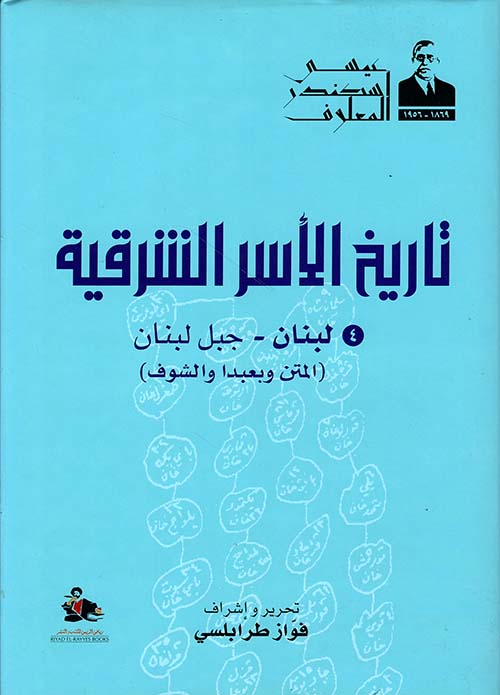
History of Eastern Families, Vol. 4: Mount Lebanon — Metn, Baabda & Chouf
تاريخ الأسر الشرقية ٤ - لبنان: جبل لبنان، المتن وبعبدا والشوف
Guide to the Book
This guide to the book presents the book's chapters and main lines of argument based on its actual contents; it is not a literal reproduction of the printed table of contents. The fourth volume of the seven-part encyclopaedia — the second-largest after the Bekaa — covers three pivotal districts of Mount Lebanon: Metn, Baabda, and the Chouf. Each has a distinct sectarian and social character: Metn with its diverse Christian families, Baabda as an Ottoman administrative centre, and the Chouf with its Druze heritage and Ma'nid-Shihabi political history. Issa Iskandar al-Maalouf (1869–1956) records hundreds of families from Ain al-Sandiyaneh and Mansourieh to Qornet Shahwan, Beit al-Din, and Moukhtara, documenting each family's origins, branches, and religious affiliation. The volume is an indispensable reference for understanding the social fabric at the heart of Mount Lebanon.
Part I — Metn District (قضاء المتن)
1 Villages and Families of the Metn
- Btighrin (بتغرين) — Syriac name meaning "house of the grieving"; residents spoke a Syriac-tinged dialect; site of ancient Qaysi-Yamani battle
- Baskinta (بسكنتا) — 1,190m; major Maronite centre; extensive records from Bishop Beshara al-Shamali's 1890s pastoral tour; families: Hrawe, Harb, Habbiqa (700+), Hankash (77), Karam (585), Ghanem, al-Haddad; also Greek Orthodox (640+) and Greek Catholic (90+)
- Bikfaya (بكفيا) — major town; families: Abu al-Lam', Gemayel (الجميّل), Jabour, Dagher, Zalzal, Saadeh, Shidyaq, and many more
- Beit Chabab (بيت شباب) — named after 4 youths from Bikfaya; silk weaving centre; 200 dead in WWI out of 2,000+ parishioners
- Beit Mery (بيت مري) — extensive records from the Risalat al-Karim manuscript
- Al-Choueir (الشوير) — families recorded 1915–1916; Rihbani family; Greek Orthodox and Maronite
- Qornet Shahwan (قرنة شهوان) — families: Raabi, Khabbara, Zaghghour, Shwaish
- Al-Mhaidthe (المحيدثة) — Maalouf family branches; Alfa/Abu Madi (including poet Elia Abu Madi إيليا أبو ماضي)
- Also: Brummana, Zbougha, Ain Saadeh (8 clans), Ain al-Sindiyaneh, al-Mansourieh, Roumiyeh, Ain Aar, Mazra'at Yashuh, and many more; ~30+ villages documented in the largest section of the volume
- Families of Armenian origin — Farh Aroutin, Samar/Safar, Manouk, Khurshid — assimilated into the Maronite community
The Metn district, stretching from the coastal hills above Beirut to the mountain peaks at Sannine, is documented as the most confessionally diverse region of Mount Lebanon. Al-Maalouf records Maronite, Orthodox, Catholic, and Armenian families living in close proximity, their interconnected genealogies reflecting centuries of migration, intermarriage, and sectarian coexistence at the heart of the Mountain.
Part II — Baabda District (قضاء بعبدا)
2 Villages and Families of Baabda
- Baabda town — administrative centre; Abu Khalil (from Mirwiya al-Hadath), Mallat (from Iddeh), Asmar (from Haballin)
- Hammana (حمانا) — major Druze centre; seat of the Muzher muqaddams (documented since 1677, ranked between princes and sheikhs); families: Abu Hatim (from Aleppo, came with Shihabi princes c. 1707), Abu Younes, Abu Dorghom
- Al-Shbaniyyeh (الشبانية) — mixed Maronite/Catholic/Druze; Druze al-Sawwaf muqaddams; Catholic Nimmar family (from Akkar); Maronite Lam'i princes
- Tarshish (ترشيش) — mixed Muslim-Christian; families: Hayik, Tannoury; Muslim: Khashimeh, Taqtaq, Zarin
- Wadi Shahrour (وادي شحرور) — Maronites: Fghali (including Shahrour al-Wadi, the famous zajal poet); Orthodox: Abu Mas'ad, Shammas
- Kfarchima, Kfarsalwan, Araya (عاريا) — Orthodox: Gharzouzi from Gharzouz; Maronite families
- Druze khalwat sites — Falougha, Bmaryam, al-Abadiyyeh (linked to Junblatt patronage), al-Hilaliyyeh
Baabda, as the administrative capital of the Mount Lebanon Mutasarrifiyya from 1861, occupies a unique position in the volume. Al-Maalouf documents both the families of the traditional mountain villages and those drawn to the district by its role as the seat of government, creating a portrait of the administrative class that governed Mount Lebanon in its final Ottoman decades.
Part III — Chouf District (قضاء الشوف)
3 Villages and Families of the Chouf
- Druze feudal hierarchy — comprehensive documentation of four ranks: princes (Tanukhi, Arslan, Shihabi), feudal sheikhs with "Akh Aziz" titles, feudal sheikhs, and non-feudal sheikhs
- Tanukhi princes (التنوخيون) — extensive genealogies from Salih ibn Yahya's medieval chronicle; both Qaysi and Yamani branches; the Qaysi line extinguished when Prince Alam al-Din killed the last four Tanukhi Qaysi princes in Aley
- Arslan princes (آل أرسلان) — traced from Emir Arslan ibn Malik of the Lakhmid dynasty (Mundhir/Nu'man); multi-page genealogy
- Junblatt (آل جنبلاط) — pre-eminent feudal family; Sheikh Bashir Junblatt referenced throughout as patron of multiple families
- Deir al-Qamar (دير القمر) — historic capital; name from ancient moon temple; families: Bustani, Ammoun, Thabit, Nakhoul; Baz (first Christian family, introduced silk weaving from Zouk Mikael, became political advisors to the Shihabi emirs); Catholic: Jawish/Shawish, Soussa (from Portugal — possible converso/Sephardic origins); Jewish quarter mentioned
- Baaklin (بعقلين) — Druze centre; Hamadeh family (3 ranks, served Sheikh Bashir Junblatt)
- Abey (عبيه) — seat of Amin al-Din sheikhs; American school (SPC precursor)
- Majdal Ma'oush (مجدل معوش) — all Maronite (~150 souls); Yamin (from Ehden), Farah families
- Niha al-Chouf (نيحا الشوف) — mixed: Orthodox Haddad, Maronite Abu Rashed, Druze Sheikh Ali Ward
- Druze migration from Jabal al-A'la near Aleppo (~400 families) to Lebanon documented with specific delegation leaders; "all Druze of Hawran are Lebanese" except Tarshan and Nassar
The Chouf, with its layered Druze-Maronite history, receives extensive treatment as the political heartland of Mount Lebanon. Al-Maalouf documents the great Druze feudal houses — Jumblatt, Arslan, Talhuq — alongside the Christian families who shared the Mountain's villages, providing genealogical depth to the political narratives of the Ma'nid and Shihabi eras. The section implicitly records the demographic transformation wrought by the 1860 civil war, as families documented in the Chouf reappear in the Metn, Baabda, and Beirut sections of other volumes.
Back Matter
- Index of Names
- Index of Places
Notes
Vol 4 of 7. Original author: عيسى إسكندر المعلوف (1869-1956). Verified (تحقيق) by فواز طرابلسي. First edition, hardcover, 24×17cm.