This volume covers the families of northern Lebanon from Tripoli and Akkar to Zgharta, Bsharri, Koura, Batroun, and Danniyeh, in a wide record of migrations, branches, and religious and social affiliations. Its strength lies in documenting the north village by village and family by family, rebuilding the region’s social image through details that often vanish from general political history. It remains a valuable reference for understanding northern Lebanon through the people who shaped its everyday fabric, not through major events alone.
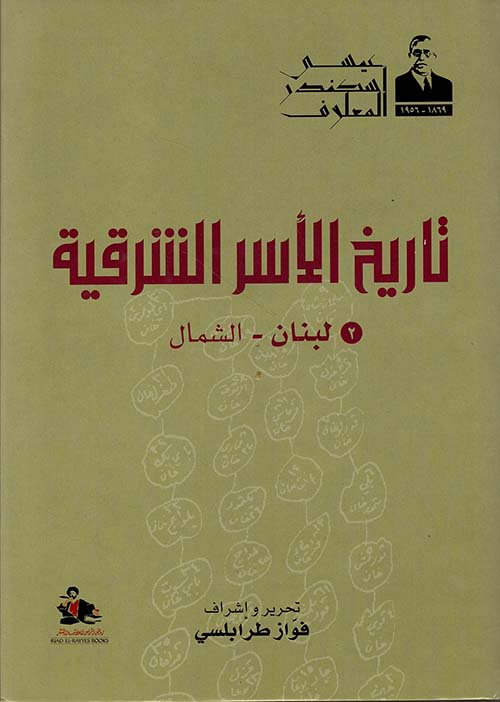
History of Eastern Families, Vol. 2: North Lebanon
تاريخ الأسر الشرقية ٢ - لبنان: الشمال
Guide to the Book
This guide to the book presents the book's chapters and main lines of argument based on its actual contents; it is not a literal reproduction of the printed table of contents. The second volume of the seven-part encyclopaedia of Lebanese family histories, documenting the genealogies and social fabric of North Lebanon across six Ottoman districts: Akkar, Tripoli, Zgharta, Bsharri, Koura, and Batroun. Issa Iskandar al-Maalouf (1869–1956) moves methodically from village to village, recording each family's origins, migration routes, branches, and religious affiliation — Maronite, Greek Orthodox, Greek Catholic, Sunni, and Shiite. Rich in detail about priestly families, Syriac manuscript traditions, feudal dynasties, and families of contested or unknown origins, the volume provides a detailed social portrait of North Lebanon at the turn of the twentieth century, where geography, agriculture, and sectarian belonging intersect in shaping family identities.
1 Akkar District (قضاء عكار)
- Bqerzla (بقرزلا) — largest village of the Qaytu' region east of Tripoli; all Maronite; families: Shihadeh (from Mushmush in Jbeil, famed for Syriac calligraphy), Hassan/Dagher (from Awtan), Saba/Tu'meh (from Aleppo), Aba Ubeid (from Bijjeh), Issa (said to be from Kayrouz of Bsharri)
- Bilad Akkar / al-Joumeh — the central nahiyeh of Akkar district, comprising 23 villages
- Beit Mellat (بيت ملات) — between Takrit and Bino, 150m elevation, all Maronite (~1,500 souls); families: al-Haj (from Kfarkadeh or Rashana, arrived late 17th c.), al-Sayfi (from Shikka), Abd al-Masih (from Zahleh, Juha family), al-Rasi (from Ras Baalbek), Ghba (from Kfar Kadeh), Shaheen (from Bkafya), al-Jubayli (from Jbeil), al-Ja'itani (from Zgharta, linked to Sfayr family)
- Hrar (حرار) — 25 Maronites from Deir al-Ahmar
- Al-Humayra (الحميرة) — near Sisouk; Orthodox and Maronites; families: Abd al-Nour (from Bermanat al-Sham, 15th c., linked to historian Antonyus), al-Jammal (from Ban), al-Sakkaf (from Zgharta)
- Al-Khrayba al-Jardiyya (الخريبة الجردية) — property of Omar Pasha, 80 Maronites; families: al-Bustani and Ghosn (from Deir al-Qamar), al-Hazouri (from Arjes), Shaheen (from Bkafya), al-Bisri (from Qana)
- Sayyidet Manjrez (سيدة منجرز) — families: al-Khouri (Maronite, from Hauran), Nasir (Orthodox in Dhahr Safar), Jum'a (from Hadath Beirut)
- Sisouk (سيسوق) — Maronite hilltop village, 500m, all from Ain Tourin; families: Sarkis (from Bijjeh), Rfoul, Abu Hanna, Zakour, Ma'awwad, al-'Aziz (from Zgharta), al-Baytar (from Zahleh, Ghosta, Kfar Habbu)
- Al-Qubbayat (القبيات) — families: al-Braydi (related to Zahleh branch), Zaytouneh (possibly Crusader "Olivia"), Mu'aykeh (Arab origin from Hauran), Daher (from al-Zawiyeh), Habish (from Ghazir), Nader (from Hauran), Khattar (from Zgharta)
- Shadra (شدرا) — families: Tarbieh; Muslim aghas: Yassin Bey and Mahmoud Bey; Shiite: Dandash and Hamadeh
- The Banu Mar'ab (بنو مرعب) — major feudal dynasty of Akkar; of Kurdish Rashwaniyya or Abbasid origin from Ma'arrat al-Nu'man; became beys of Akkar after the Sayfa dynasty; notable conflicts with Banu Hamadeh; patronised poets including Butrus Karameh; famous horsebreeders (Saqlawi, Ma'naqi, Furaysat, Tuwaysi breeds)
The opening district covers the vast Akkar plain and highlands of northernmost Lebanon, documenting predominantly Maronite mountain villages alongside mixed-community settlements and the powerful Muslim Banu Mar'ab feudal dynasty. Al-Maalouf traces families arriving from across Greater Syria — Bsharri, Zahleh, Deir al-Qamar, Hauran, Aleppo — illustrating the dense migration networks that shaped northern Lebanon's demographic mosaic.
2 Tripoli District (قضاء طرابلس)
- Villages and towns of the district — al-Danniyeh sub-region: Sir al-Danniyeh, Karm al-Muhr, Bhawita, Kfar Habbu; the city of Tripoli and its port Mina
- Families of the district (عيال القضاء) — comprehensive alphabetical register including: Basil, Tuwayni, al-Jisr, al-Hassan, al-Khouri, Diab, Rafi'i, Ra'ad, Rfoul, Zariq, Zaghbi, Sandrosi, Shadid al-Razi, Shahwan, Sadaqa, Tarbieh, Tarzi, Arida, Akkari, Fakhr, Karameh, Krim, Lutf Allah, al-Matraji, al-Muqaddam, Miqati, Nufal, and others
- Christian families of Tripoli — Greek Orthodox: Bustros, Muqaddam, Saba; Maronite families migrating from Mount Lebanon; Greek Catholic commercial families
- Muslim families of Tripoli (عيال طرابلس الإسلامية) — the great Sunni notable families: Rafi'i (with extensive genealogical tree of judges and scholars), al-Jisr, Karameh (from Homs, famed poets and litterateurs), Miqati, Tarbieh; detailed histories of the naqib al-ashraf (marshal of the Sharifs) lineage
- Scholars and notables — entries on judges, muftis, naqibs of Tripoli; the Rafi'i family's multi-generational service in judiciary and religious leadership from the 10th hijri century onward
The longest section of the volume, spanning the city of Tripoli and its hinterland from the Danniyeh highlands to the coast. Al-Maalouf documents the city's great Sunni families — their genealogies tracing to the Prophet, their multi-generational control of judiciary and religious posts — alongside its Christian merchant communities. The section on the Rafi'i family alone constitutes a multi-generational biography spanning five centuries of religious scholarship.
3 Zgharta District (قضاء زغرتا)
- Villages of the district — Awkar, Harf Mezyara, Hriqs, Hmays, Khalidiyya, Kfar Dlaqus, Kfar Shakhna, Kfar Masda, Kfar Zina, Kfar Saffab, Kfar Fu, Kfar Yashit, Majdalya, Mazra'at al-Tuffah, Mezyara, Ijba'a, Bshentateh, Kosbar, Aito, Arde (all Maronite, 800–1,337 souls)
- Ehden (إهدن) — summer seat at 1,500–1,665m elevation; semi-legendary origins tracing to descendants of Shem son of Noah, rebuilt by King Hadad Azar; 23 churches and 5 monasteries; one of the greatest Maronite strongholds in Lebanon
- Zgharta town — winter seat; Church of Mar Youssef built by ancestor of Youssef Bey Karam
- Families of the district — al-Karam/Abu Karam (most prominent; extensive genealogy of Youssef Bey Karam, national hero), Frangieh, Doueihy (associated with Patriarch Estephan Doueihy), Mashayikh Banu Ghaleb (from Haqel Jbeil, ruling sheikhs of Arde), Rfoul (from Ain Tourin), Yamin, Ubeid, Sarkis (from Aito, 700+ year lineage linked to Tanukhi emirs), al-Khouri, Ltouf al-Khouri (from Mushmush)
Covering the predominantly Maronite district of Zgharta in the mountainous hinterland east of Tripoli, this section documents the closely interlinked village communities from Ehden to Mezyara. Al-Maalouf records the feudal families and their political rivalries, the priestly lineages with their Syriac manuscript traditions, and the migration patterns connecting Zgharta's villages to Tripoli and beyond.
4 Bsharri District (قضاء بشري)
- Jubbat Bsharri (جبّة بشري) — boundaries from Mezyara and Ras Kayfa to Ain Akrin and the Cedars; historical survey of the district including its Crusader-era and Marada heritage
- Bsharri town (بشري) — population 5,500; families: Kayrouz (from Ain Halya near Zabadani; branches: al-Hilou to Mushti, Khalifeh to Ehmej, Diab to Aleppo), al-Razi/Banu al-Zahir, Jirdaq, Rahmeh
- Hasroun (حصرون), al-Diman (الديمان) — including Kfar Saroun, Beit Ra'ad, Brisat, Qaytur
- Tourza (طورزا), Abdin (عبدين), Ain Tourin (عينطورين)
- Bsharri's diaspora in the Baalbek region — Deir al-Ahmar, Ainaata, Labweh, Barqa, al-Qada, al-Basalit, al-Mushitiyya; approximately 3,000 landowners and 2,000 sharecroppers from Bsharri families settled in Baalbek
- The Sacred Cedars (الأرز المقدس) — church enlarged by Patriarch Elias al-Howayek; Monastery of Mar al-Musha' (Halabiyya order); Monastery of Mar Sarkis (Carmelite)
The heartland of the Maronite community and home of the Sacred Cedars. Al-Maalouf provides a comprehensive survey of the Jubbat Bsharri — its boundaries, churches, and monasteries — alongside detailed family histories tracing the Kayrouz clan from the Zabadani valley and the Banu al-Zahir chieftains. A striking feature is the documentation of Bsharri's extensive colonisation of the Baalbek plain, where thousands of mountain families established agricultural settlements.
5 Koura District (قضاء الكورة)
- Villages of the district (28 villages) — Amioun, Bataboura, Bahboush, Bshmezzin and Dar Bshmezzin, Ba'awneh, Batram, Bkeftin, Bmahrain, Dar Ba'ashtar, Rshdbin, Zghorta al-Matawila, al-Zakzouk, Shoubrin, Shikka, Abrin, Ain Akrin, Qalamoun, Farsa, Kfar Hata, Kfar Murr, Kfar Saroun, Kfar'ata, Kfarya, Majdal, Nakhleh, Wata Fares
- Families of the district — al-'Azar (chieftain family, mashayikh), al-Ayyoubi, al-Hawi, al-Khawli, Saba, Akkawi, Kisbani, Mufarrej
- Amioun (أميون) — families: Banu al-'Azar (mashayikh), al-Shammas, Talib, al-Haj Ubeid, Khuzameh
- Bataboura (بتعبورة) — "House of wheat"; ~400 souls; families: al-Khouri (from the Salim family of Batroun, possibly from Hauran), Saqr (from Hauran/Adhra'at)
- Mixed confessional composition — predominantly Greek Orthodox, with Maronite and Greek Catholic minorities; Shiite community in Zghorta al-Matawila
The Koura district, stretching from the coast at Shikka inland to the olive-clad hills, is documented through its 28 villages and their predominantly Greek Orthodox population. Al-Maalouf records the chieftain al-'Azar family of Amioun, the Ayyubid-connected families, and the detailed migration routes connecting Koura villages to Hauran, Batroun, and Tripoli. The presence of a Shiite community in Zghorta al-Matawila adds confessional diversity to this otherwise largely Orthodox district.
6 Batroun District (قضاء البترون)
- Historical introduction — Batroun from Greek Botrys (grape cluster); ancient Phoenician city fortified by Demetrius; Bishop Porphyrius mentioned at the Council of Chalcedon
- Batroun town — population 12,696 souls; Greek Orthodox families: Zakhim (al-Batrouni branch in Brummana), Saqr, Imad, Salim, Qadis, al-Najjar, al-Fakhouri, Mina, al-Hamati, Dibo, Uwayjan, al-Doumani, Nour
- Maronite families of Batroun — Aql, al-Khubaz, Fares, Shidyaq, Hakim, Tarabulsi, al-Tabshi
- Tannourin (تنورين) — major sub-region, 8,000 Maronite inhabitants all tracing descent to a single ancestor Abu Qurqmas; vast territory taking 8 hours to cross on horseback; coal deposits; ancient cedar forests; families: Harb, Matar, Ghoush, Shamoun
- Batroun al-Wusta (البترون الوسطى) — the central sub-district and its villages
- Historical inhabitants — ancient Muslim and Shiite populations of Keserwan and surrounding areas
- Smar Jbeil (سمار جبيل) — origin of the Basil family, traced to Crusader roots; branches across Batroun, Keserwan, Jbeil, Metn, Chouf, Jezzine
- Bsha'leh (بشعلة) — produced two bishops; detailed migration histories
- Villages: Sla'ata, Douma, Hardine, Kfifan, Madfoun, Jaj, Bjdarfel, Bqesmiyya, Ram, Niha, and dozens more — many containing ancient ruins: stone sarcophagi, rock-hewn oil and wine presses, ruined temples, Crusader-era churches
The final district section, covering the Batroun coast and its mountainous hinterland reaching to the Tannourin heights. Al-Maalouf opens with a historical survey of ancient Batroun — its Phoenician origins, Hellenistic fortifications, and early Christian bishops — before documenting the town's mixed Orthodox-Maronite population and the surrounding villages. The section records both the ancient Orthodox families of the port town and the Maronite communities of the mountain villages, tracing their connections to Keserwan, Bsharri, and beyond.
Back Matter
- Index of Names
- Index of Places
Notes
Vol 2 of 7. Original author: عيسى إسكندر المعلوف (1869-1956). Verified (تحقيق) by فواز طرابلسي. First edition, hardcover, 24×17cm.