This volume documents the families of South Lebanon across Saida, Tyre, Jabal Amil, Hasbaya, Marjeyoun, Nabatieh, and neighboring areas, composing a highly diverse social map. Issa Iskandar al-Ma'louf connects genealogy to local history, recording migrations, alliances, confessional change, and the forms of religious and civic prestige that shaped the modern south. Its importance does not lie only in the density of names, but in treating the south as a source for social history rather than merely a geographical backdrop for later political events.
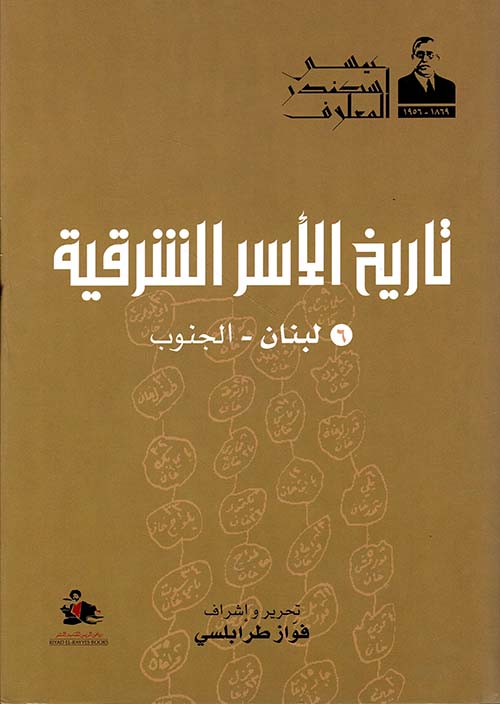
History of Eastern Families, Vol. 6: South Lebanon
تاريخ الأسر الشرقية ٦ - لبنان: الجنوب
Guide to the Book
This guide to the book presents the book's chapters and main lines of argument based on its actual contents; it is not a literal reproduction of the printed table of contents. The sixth volume of the seven-part encyclopaedia, documenting the families of South Lebanon across the districts of Jezzine, Sidon, Tyre, Jabal Amel, and the Wadi al-Taym region encompassing Hasbaya, Marjayoun, and Nabatieh. The south is notable for its dense sectarian diversity: Maronite and Catholic families in and around Jezzine, Sunni and Orthodox merchant families in Sidon and Tyre, Shiite feudal dynasties and religious scholars in Jabal Amel, and Druze emirs in Hasbaya and Wadi al-Taym. Al-Maalouf traces Jezzine's history from its possible Phoenician roots through the Crusaders and Fakhr al-Din al-Ma'ni, and provides a rare documentation of Jabal Amel's feudal structure and the Shihabi emirate of Wadi al-Taym.
1 Jezzine District (قضاء جزين)
- Geography and history of Jezzine — possible Phoenician origins (ancient stone sarcophagi); Crusader settlement; Shiite Khazraji muqaddams; Fakhr al-Din al-Ma'ni's cave refuge; famous waterfall (~100m); population ~5,000; roads to Sidon and Beit al-Din
- Jezzine families — Haddad, Aoun Helou, Qattar, Mu'awshi, Nassif, Khouri, Slim, Karam, Abu Razq, Barti, Abu Nader, Qardahi, Hajjar, Sakkaf, Qamar, Wahbeh, Aaqouri, Ruhayym
- Maronite families — Muzher (oldest family), Abu Razq (second oldest, from Aaqoura via Tripoli to Jezzine; Monsignor Boulos Razq), Qattar (said to be from Banu Hanoush and Kayrouz), al-Hilou (from Baabda), Abu Nader, Azar, Karam (from Ehden), Wahbeh (from Beit Abu Zakhm in Hasbaya), Kokbani (from Kokba/Hasbaya), Mu'awshi (from Majdal al-Ma'oush then Hasbaya), Nassif (from Bkafya), al-Khouri (Mamluk-era Rab' Mudd lineage from Hauran)
- Catholic families — Haddad (from Barouk; Iskandar Bey al-Haddad, qaimaqam of Zahleh), Sakkaf, Hajjar (Bishop Basilius Hajjar and Bishop Gregorius Hajjar — not related; Basilius from Sakkaf family, Gregorius from Banu Bhait of Damascus)
- Shiite muqaddams of Jezzine — Beit al-Faqih in Mleekh, Rihan, and Armata; the Khazraji dynasty
- Bkassine (بكاسين) — families: Abu Itmeh, al-Haj, Al Abboud, Banu Wakim
- Qaytouleh (قيتولة) — Maronite and Catholic families: Banu al-Haj, Al Abboud
The most detailed section of the volume, centred on the mountain town of Jezzine with its spectacular waterfall and ancient heritage. Al-Maalouf traces its families' origins across Lebanon — from Ehden and Baabda to Hasbaya and the Barouk — and documents the transition from Shiite Khazraji rule to the predominantly Maronite-Catholic town of his day, with its government palace, cathedral, and the Ruhayym family's mansion.
2 Sidon District (قضاء صيدا)
- Christian families of Sidon — Greek Catholic: Dabbana (origins in Vol. 1), Sasi (from Damascus), Awda (possibly from Akka), Boulad (moved to Egypt), Nakhleh (from Akka, consuls), Khallat (from Damascus, Sardinian/Italian consuls), Zakkar (ancient Damascus family), al-Kattal
- Families of Sidon (1916 account) — Greek Catholic: al-Zammar (from above Deir al-Mukhallas); Orthodox: Butrus al-Zahhar; Catholic: al-Qanwati, al-Mubayyad, Qandilift, Latouf, al-Safadi, Dabbana, Sasi, Awda, Bustros (different from Beirut Bustros), Sarkis, Sousouh, Sabra (from Shafa Amrou, including physician Ya'qub), Nakhleh, Zakher (from Aleppo via Akka)
- Sunni and other Muslim families of Sidon
Sidon's family landscape reflects its history as a cosmopolitan port city. Al-Maalouf documents Greek Catholic merchant families with roots in Damascus and Akka, Greek Orthodox families, and families who served as consuls for European powers — a marker of the city's international trade connections in the 19th century.
3 Tyre District (قضاء صور)
- Tyre city — seven confessions present (Sunni, Shiite, Protestant, Greek Orthodox, Greek Catholic, Latin, Maronite); 36 Maronite clans documented with population counts and origins
- Greek Catholic families — Saliha, al-Qibti (Coptic origin from Egypt), al-Khawwam (from Akka; Bishop Athanasius, metropolitan of Tyre), Hakima (from Damascus), Farah (French consul), Ayyoub (from Qana al-Jalil), Mannassa (from Hasbaya/Anfeh), al-Fakhouri (originally Greek "Dimitriades" from Kavala near Salonika; produced bishops)
- Maronite villages of Bilad Bishara — Debl (21 clans, ~670 souls; families: Ishaq from Akkar, al-Ra'i oldest family, Atiyya from Keserwan, Luqa from Bethlehem), Rmaysh (all Maronite, 4 main clans), al-Qozah, Ain Ebel (16 clans; Sadir from Hasroun, Diyab and Khraish from Hadath al-Jibbeh, Khairallah from Bsharri/Kayrouz)
- Alma al-Sha'b (علما الشعب) — Protestant, Catholic, and Maronite; 5 clans: al-Faghri and al-Sayyah (from Bkafya), Nasr and Abboud (from Jarnaya), al-Bawari (from al-Bawar, Keserwan)
A shorter section reflecting Tyre's reduced population in al-Maalouf's era. He documents the surviving Christian families — several on the verge of extinction — and notes the connections between Tyre's families and those in Sidon, Akka, and Hasbaya.
4 Jabal Amel (جبل عامل)
- Jabal Amel and its emirs — historical survey from al-'Irfan magazine; the feudal system under Ottoman suzerainty
- Earliest emirs — Banu Sardoun (extinct, at Wadi al-Hujair); Al Ali al-Saghir (the "Waili," claim descent from Rabi'a bin Nizar; modern continuation: al-As'ad family — Kamil Bey al-As'ad, major za'im); Al Sukkar (Tbnin castle); three-way division: Saghiriyya (Bilad Bishara), Sa'biyya (Shqif/Beaufort Castle, claim Ayyubid descent from Salah al-Din), Munkariyya (Tuffah and Shoumar)
- The Shiite in Damascus and Jabal Amel — historical connections
- Sunnis in Jabal Amel
- Sayyid families — Al al-Amin (a.k.a. Qashaqish, Husayni sayyids; al-Sayyid Muhsin al-Amin, renowned scholar in Damascus), Sharaf al-Din (Musawi sayyids with Isfahan connections), Nur al-Din (related to al-Murtada of Damascus), Fadlallah (Hasani ashraf from Mecca)
- Scholarly families — al-Hurr (claim descent from al-Hurr al-Riyahi of Karbala; scholars in Jba'a), Khatoun/al-Bourini (scholars and physicians in Aynata since 10th c. AH), Marwa (Hamdani Arabs, claim descent from Baha' al-Din al-Amili), Zayn al-Din (from al-Shahid al-Thani, the Second Martyr), Rida (Sheikh Ahmad Rida, historian), Yahya (Makhzumi origin, from al-Taybeh)
- Al al-Zayn — from Shuhour; Ahmed Arif al-Zayn founded the journal al-Irfan; branch: al-Khalil family (Abd al-Karim al-Khalil, executed by Jamal Pasha 1916)
- Villages of Bint Jbeil — al-Jiss, Dibl, Rmaysh, al-Qawzah, Ain Ibil
- Banu Shim'a (بنو شمعة) — originally Shiite from Jabal Amel who converted to Christianity; branches became Habqouq (Beirut), Habbiqa (Baskinta), Tarbieh (Tripoli)
A historical and genealogical survey of the Shiite heartland of South Lebanon. Al-Maalouf draws on Sheikh Sulayman Zahir's articles in al-'Irfan magazine to reconstruct the feudal order of Jabal Amel — from the extinct Banu Sardoun through the three-way division of power among the Saghiriyya, Sa'biyya, and Munkariyya dynasties. He documents the great Shiite scholarly families — al-Amin, Sharaf al-Din, al-Zayn — alongside the feudal houses, providing a rare pre-modern genealogical record of a region often overlooked by Christian-focused genealogists.
5 Wadi al-Taym, Hasbaya, Marjayoun & Nabatieh
- Wadi al-Taym — name, boundaries, geography — named after the Taym tribe (from Quraysh, Taym ibn Murra ibn Ka'b, kinsmen of Abu Bakr al-Siddiq); divided into Western (Hasbaya) and Eastern (Rashaya al-Wadi) regions; ancient trade route from Damascus to Akka and Egypt
- Physical geography — valley running 17 miles long and 11 miles wide; rivers: Hasbaya, Sheba, Sarda, Wadi, Abu Dijaja; flanked by Mount Hermon; historical fauna including lions, leopards, deer, falcons
- Historical divisions (1475) — villages and farmsteads; populations
- Hasbaya and the Shihab emirs — ruled from Hasbaya castle since Amir Munqidh (d. 1447); detailed account of wars with Tatars/Mongols; modern notables: Amir Najib Bey, Amir Khalid (MP), Amir Fawaz
- Druze families of Hasbaya — Shams (beys of Hasbaya, from Iraq; Salim Bey Shams received Swedish royal medal), Qays (Sheikh Hamad Qays was Sheikh al-Aql), Ra'd, al-Khatib, Hamza, Abu Ghayda, Badawi
- Christians of Hasbaya — Maronites: al-Kanisi (from Ashqout), Yamin (from Ehden); Orthodox: Matar (largest, from Shuwair), al-Yaziji (from Homs), Ghubril (Greek origin, ~500 years); Catholics: Khidr, al-Hawi, al-Shufi
- Marjayoun and Jdeidet Marjayoun — Christians largely trace origin to Azra' in Hauran (~1717); founding myth of Abu Rajih and the three birds; families: Rashid (al-Rawashda), Bioud, Barakat, Hardane, Abla, Samara; Fares Bey al-Khouri of al-Kfayr — translator for British consul, later major Syrian politician
- Druze villages — Khalawat al-Kafir (Abd al-Karim family, sheikhs; Sheikh Nassir al-Din was wealthiest in the western region), Maymas (Abu Qansuh from Baysour, Abd al-Samad from Amatour), Ain Qniyeh
- Village families — Ibl al-Saqi, Jbata al-Zayt, al-Khiam (al-Ashqar, al-Haddad — Dr. Rizqallah al-Haddad the writer; poet Sulayman al-Haddad married daughter of Sheikh Nassif al-Yaziji and fathered Najib al-Haddad the playwright), al-Dhanibeh, al-Safineh, Sha'am, Ain Qni
The final and most geographically expansive section, covering the Wadi al-Taym valley from Mount Hermon to the Hula plain. Al-Maalouf provides an extensive geographical and historical introduction — tracing the valley's name to the Arab Taym tribe who conquered it after the Islamic conquests — before documenting the families of Hasbaya under Shihabi Druze rule, the mixed communities of Marjayoun, and the villages stretching from Nabatieh to the slopes of Mount Hermon. The section records ancient trade routes, river systems, and the valley's transformation from a densely forested frontier to a settled agricultural region.
Back Matter
- Index of Families
- Index of Places
Notes
Vol 6 of 7. Original author: عيسى إسكندر المعلوف (1869-1956). Verified (تحقيق) by فواز طرابلسي. First edition, hardcover, 24×17cm.