This part is devoted to Keserwan and Jbeil, two regions of major weight in the religious, political, and social history of Mount Lebanon. Issa Iskandar al-Ma'louf traces villages, family branches, origins, and migrations, while also bringing into the narrative the role of landed and clerical families and the region’s long local memory. The book therefore offers more than genealogical material: it provides a detailed map of a mountain world in which power, belonging, and memory were shaped through family, church, and land.
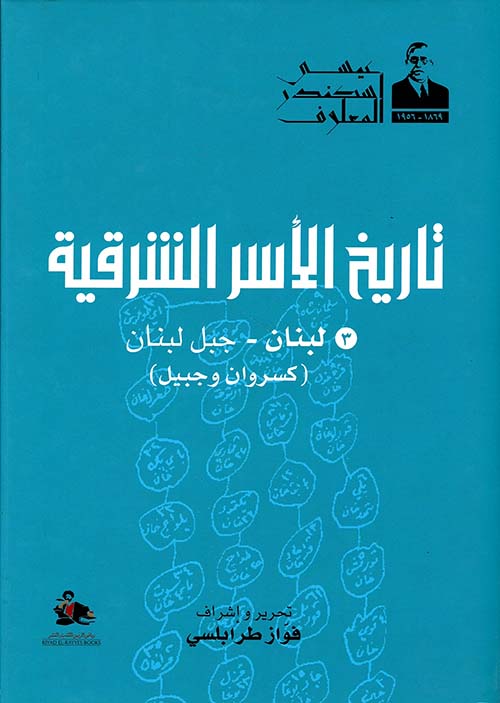
History of Eastern Families, Vol. 3: Mount Lebanon — Keserwan & Jbeil
تاريخ الأسر الشرقية ٣ - لبنان: جبل لبنان، كسروان وجبيل
Guide to the Book
This guide to the book presents the book's chapters and main lines of argument based on its actual contents; it is not a literal reproduction of the printed table of contents. The third volume of the seven-part encyclopaedia, covering the families of Keserwan and Jbeil in Mount Lebanon — a region of exceptional historical density in terms of Maronite presence and connections to Crusader and Marada history. Issa Iskandar al-Maalouf (1869–1956) documents dozens of villages from Blouneh and Jounieh to Zouk Mikael and Yahchoush, recording each village's families, their branches, and their migrations. The volume opens with a unique section on the Marada emirs — the medieval Maronite warrior-lords of Mount Lebanon — before proceeding to the village-by-village family register that characterises the series. As throughout, the documentation encompasses ordinary, clerical, and feudal families alike.
• The Marada Emirs (أمراء المردة)
- Origins — Carlomanus, a Frankish notable, arrived in Syria (c. 605 CE); his nephew Elidibous (Abdon) founded the Marada dynasty in Antioch
- Agathon in the village of Saroum (Suwaydiyya region); Yohanna — elected by the Franks as bishop of Batroun and Mount Lebanon, then made patriarch by Pope Sergius; his sister married a Marada emir, producing Emir Youssef (governor of Jbeil) and Emir Kisra (over Keserwan/al-Asiyah)
- The muqaddams (مقدّمون) — Muqaddam Ya'qub and his sons; Muqaddam Kamal al-Din ibn Abd al-Wahhab al-Aytawi; Muqaddam Rizq Allah; succession of muqaddams through the 15th–17th centuries
- Muqaddam Assaf and Muqaddam Dagher (1517); Emir Mansour Assaf of Ghazir; Muqaddam Fares al-Lam'i al-Matni; Muqaddam Khater al-Hasrouni (1531, ruled 17 years); the emergence of Sheikh Abu Nader al-Khazen in Keserwan
A distinctive opening section that situates the family histories of Keserwan within the deep political history of the Mountain. Al-Maalouf traces the Marada emirate from Frankish-era Antioch through the medieval muqaddams to the rise of the Khazen family, providing the feudal context for the family migrations documented in the rest of the volume.
1 Keserwan District (قضاء كسروان) — Villages
- Catholic family migration to Keserwan — the 1774 Orthodox-Catholic schism drove Melkite families from Koura, Batroun, and Aleppo to settle in Keserwan; families: al-Qattan (from Amioun), al-Madawwar (from Amioun), Awda (from Douma), al-Diqqi (from Aleppo), Zeiniyya (from Tripoli)
- Blouneh (بلونة) — 189m; families: al-Mazouk, Awwad (from Hasroun), Khalifeh, Sfeir, Wahibeh (from al-Khazen); name possibly from temple of Apollo
- Bqaatouta (بقعتوتا) — 1,010m; Khazen sheikhs (74 souls), Habishiyya sheikhs; detailed account of Sheikh Abu Khattar al-Khazen (1617) and Prince Fakhreddine
- Jeita (جعيتا) — 150m; site of the famous grotto whose waters were channelled to Beirut; families: Sfeir, Jemayel, Baroud, Karam, Raad
- Dalbta (دلبتا) — receives the most extensive treatment in the volume (~50 pages) thanks to the manuscript of Khoury Mansour al-Hattouni; families: Makhlouf, Hattouni, Basil, Jemayel, Halou, Mdawlab; vivid social history including the 1747 plague (40 dead in 130 houses), 1780 hailstorm, 1835 census evasion (7 villagers memorised fake population lists to deceive Ibrahim Pasha's surveyors)
- Zouk Mikael (زوق مكايل) — one of the few mixed Maronite-Melkite villages; Melkite families: al-Munir, Awda, Taqla/Abu Issa, al-Qattan, al-Mugharbel (from Aleppo); Maronite families: al-Hani (from Ghazir), Naffaa, Badran; famous for silk weaving and goldsmithing
- Ajaltoun (عجلتون) — 750m; seat of the Khazen sheikhs; 30+ families; traditional site of ancient Adonis temple
- Ashqout (عشقوت) — home of the Massad family (produced Patriarch Boulos Massad, famous genealogist-historian); Issa Seif family claims Crusader French origins
- Ghazir (غزير) — 600m; former seat of Keserwan's Qaimmaqam; Jesuit school; seat of the Habishiyya sheikhs (from Yanouh, arrived ~1518); burial crypts of Assaf, Sayfa, Maan, and Shihab emirs survive; Metropolitan Youssef al-Dibs
- Ghosta (غوسطا) — ancestral seat of the Basil and Khazen families; Basil genealogy (~50 pages, the most extensive in the volume) traces to Smar Jbeil with competing claims of Crusader French origins from Lyon (1354)
- Yahchoush (يحشوش) — home of the Barakat family; Daoud Bey Barakat was editor of Egypt's al-Ahram newspaper
- Also: Daraya, Bqaata Kanaan, Deir Hrash, Ain al-Rihaneh, Rifoun (Sfeir dominant with 574 members; Qardahi family including Fr. Gabriel al-Qardahi, author of Syriac al-Lubab), Suhayla, Shartoun, Aramon (site of Mar Abda Harharya monastery, 1688), Mazra'at Kfardbian
The main body of the volume, documenting Keserwan's overwhelmingly Maronite villages from the coast at Jounieh (150m) to the mountain heights of Kfardbian (1,010m+). Al-Maalouf traces the dominant migration flow from the Jbeil highlands (Jaj, Aqoura, Smar Jbeil, Yanouh) downhill into Keserwan, with secondary flows from Ehden/Bsharri, Batroun, Hauran, Aleppo, and Cyprus. Dalbta receives the most extensive treatment thanks to the Hattouni manuscript, which preserves vivid social history alongside genealogies. Several families claim Crusader-era origins.
2 Notable Keserwan Families
- Bittar (بيطار), al-Sha'er (الشاعر), Shidyaq/al-Alam (شدياق/العلم), Shalfoun (الشلفون), Shoushan (شوشان)
- Sa'igh (صائغ), Safar (صفر), Ajoul (عجول), Ajiz (عجيز), Araq (عرق)
- Fakhouri (فاخوري), Farah Aroutin (فرح أروتين), Fitrouni (فيطروني), Qaraqmaz (قرقماز)
- Kamid (كميد), Mubarak (مبارك), Muhasib (محاسب), Makhlouf (مخلوف), Madawwar (مدوّر), Madawlib (مدولب)
- Al-Hilou and Shni'i (الحلو وشنيعي) — al-Hilou left Hasrayel in Jbeil in late 17th century
- Basil (باسيل) — extensive genealogy; all branches trace to Smar Jbeil in Batroun district; branches in Dalita, Ma'rab, Hadath Beirut, Jbeil, Daroun, Ghosta; clerical members including bishops from Smar Jbeil
Extended genealogical entries for the major families of Keserwan, many tracing their origins to the Jbeil and Batroun regions. The Basil family receives particularly detailed treatment, with al-Maalouf mapping its branches across multiple villages from the ancestral seat in Smar Jbeil.
3 Jbeil District (بلاد جبيل)
- Bajjeh (بجّة) — all Maronite; dramatic oral histories: the rescue of women held hostage by the Muslim Sha'er family of Toula; the legend of al-Aaraj who hid in a cave with his fiancée for seven years
- Bkhaz (بخعاز) — Greek Orthodox village on the coast; Syriac name meaning "house of the cat"; families from Damascus (1721) and Akkar
- Al-Barbara (البربارة) — origin of the Barbari/Sursock family of Beirut; three sons from Baalbek (1471): Marjan, Younan, Wazan; the Wazan branch became the Sursock family (~1560)
- Jaj (جاج) — 4 main clans (451 souls in 1905): al-Khoury (140), al-Ajalteh/Sfeir (179, from Ajaltoun), al-Samrani (158, produced 3 bishops), al-Zaanif (158); original home of the Khazen family before they moved to Keserwan (~1470); Crusader-era ruins
- Byblos city (جبيل) — ancient city of Tammuz/Adonis; Muslim families: al-Husami (ancient), Zayn al-Din; Maronite families: Muaijin, al-Sa'igh, Abu Shalha; Orthodox: al-Baladi
- Al-Aqoura (العاقورة) — 1,151m; all Maronite; one of the great source villages of Maronite migration; published history by Fr. Louis al-Hashim (297 pages, 1920); sheikhs: Banu al-Hashim, Banu Muhanna
- Amsheet (عمشيت) — mercantile powerhouse of the Jbeil coast; families: Lhoud (Asaad Bey, administrative council), Karam (including writer Afifeh Karam in America; the branch from which Youssef Bey Karam descended via Lattakia), Kalab/Kleb (origin story involving an insult), Wahbeh, Banbino
- Lehfed (لحفد) — 20 clans, 441 souls; produced Patriarch Yuhanna al-Lahfadi and historian-bishop Jibrail ibn al-Qila'i; 7 ancient monasteries and 12 churches; archaeological finds: Phoenician sarcophagi, Stone Age flint tools; Mar Houshaab's cliff-face hermitages sheltered Youssef Bey Karam for 15 days
- Meshmoush (مشمش) — 9 clans, 544 souls; all Maronite except one Shia family; home of Yuhanna Marmghoun (sent to Rome by Patriarch al-Duwaihi, obtained French consulship); birthplace of first Antonine monastic order Superior General (1701)
- Gharzuz (غرزوز) — Azar family claims same Ghassanid ancestry as Khazen and Azar of Amioun: four brothers from Hauran dispersed to Jaj (Khazen), Amioun (Azar), Bir Zeit (Palestine), and Gharzuz
- Jarbata (جربتا) — ~550 souls; Basbous family dominant (produced Metropolitan of Sidon)
The Jbeil district is documented as the ancestral cradle of many of Lebanon's most prominent families. Jaj is presented as the origin of the Khazen sheikhs who departed ~1470 for Keserwan. Al-Aqoura emerges as one of the great source villages of Maronite migration — sending families across Mount Lebanon. Al-Barbara establishes the link between the Barbari family and the Sursock dynasty of Beirut. Lehfed's seven ancient monasteries and archaeological finds make it invaluable for cultural heritage. Meshmoush's diplomatic connection to Rome via Marmghoun bridges this remote highland village to European courts.
Back Matter
- Index of Names
- Index of Places
Notes
Vol 3 of 7. Original author: عيسى إسكندر المعلوف (1869-1956). Verified (تحقيق) by فواز طرابلسي. First edition, hardcover, 24×17cm.